Products Categories:
WAIT, DONT GO!
Before you leave, we have a special offer just for you! Combo deals at a special discounts, for your purchase.

Products Categories:

Products Categories:
Share:
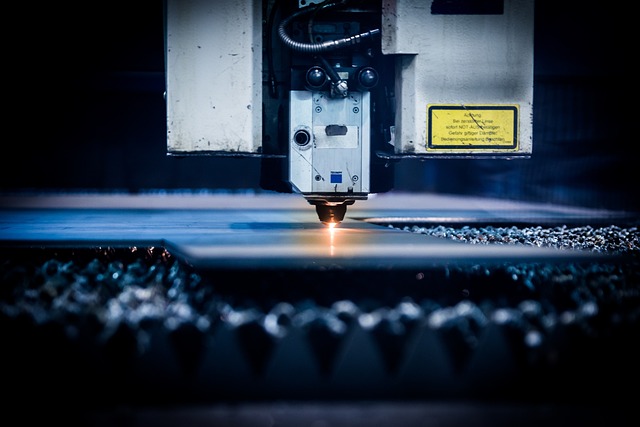
Laser cutting looks deceptively simple from the outside.
Johannesburg is a city that runs on fabrication. The skyline keeps changing, the suburbs keep reinventing themselves, and small businesses are constantly upgrading their signage, décor, branding and metalwork. When people search “laser cutting Johannesburg”, they’re not dabbling in casual curiosity—they’re hunting for a workshop that can cut accurately, quote fairly and deliver on time.
Laser cutting looks deceptively simple from the outside. A beam of light slices through metal, acrylic, wood or stainless steel with the crispness of a scalpel. Behind that crispness hides a cocktail of physics, engineering, maintenance routines and human competence. Choosing the right shop matters because the wrong one leads to warped edges, inaccurate cuts, delays and those dreaded “we need to redo your job” messages.
Let’s break down the real-world factors that separate an excellent Johannesburg laser cutter from a stress-inducing one.
A laser cut edge can tell a whole story. A clean, satin-smooth cut means the operator understood the relationship between speed, power and material thickness. A jagged or overheated edge usually means the machine wasn’t calibrated or the operator rushed through settings.
In Johannesburg, workshops vary wildly. Some run high-end industrial fiber lasers capable of cutting stainless steel like butter. Others use older CO₂ machines better suited for acrylic and decorative work. Neither is “bad,” but each has a different purpose. The only bad combination is a workshop pretending one can substitute for the other.
True quality shows in three places:
The accuracy of your dimensions. The cleanliness of your edges. The repeatability of your pieces.
If you’re ordering a batch of 150 metal brackets, you need every bracket to be identical. If you’re ordering a decorative gate, you need every curve to be smooth enough to impress a neighbour with expensive taste. In both cases, precision isn’t negotiable.
People often think laser cutting is priced purely by the metre, but that’s only part of the equation. Price comes from material thickness, complexity of design, cutting time and machine wear. A simple square cut from a 2 mm mild steel sheet always costs less than a decorative swirl pattern cut from 6 mm stainless steel.
Johannesburg’s market has a particular rhythm: cheaper workshops compensate with older machines or slower turnaround, while higher-end fabricators charge more because they’re using faster lasers, better extraction systems, and operators who actually know what they’re doing.
The sweet spot is a workshop that explains pricing clearly and gives you options instead of mysterious numbers. If you ever receive a quote with no breakdown at all, treat it like smoke from a burning workshop—it’s a sign to step back.
Plenty of local laser cutting businesses in Johannesburg are competent, but only a handful manage their workflow properly. A workshop with poor scheduling turns a “two-day job” into a week-long headache. A workshop with broken communication leaves you wondering whether your gate panel is finished or still sitting in the digital queue.
Turnaround time is usually dictated by three things:
The age and speed of the machine.
The skill of the operator.
The workshop’s ability to handle file preparation and nesting efficiently.
A good shop won’t overpromise. If they say “two days,” they mean it. If they say “we’ll try,” that means it might take much longer. In an industry filled with tight deadlines—shopfront renovations, new business launches, Airbnb upgrades—speed is a competitive advantage.
Johannesburg customers love a company that can cut today and deliver tomorrow. The fastest shops usually have well-maintained fiber lasers and a dedicated pre-production team who prepare files the moment they arrive.
Even the strongest laser is only as good as the person steering it. Experienced operators know how different materials behave when the beam meets them. Mild steel curls one way when heated; aluminium boots out more reflection; acrylic melts if your speed isn’t dialled in; wood burns if the airflow is wrong.
A seasoned operator adjusts settings for humidity, sheet flatness, coating type, and the dreaded “material batch inconsistency.” A newcomer simply presses start and hopes physics behaves.
When searching “laser cutting Johannesburg,” what you’re really looking for is a workshop with experience sculpted into muscle memory, not just shiny equipment.
The city’s fabrication scene is wonderfully diverse. You’ll find shops cutting:
Stainless steel for balustrades, house numbers and architectural features.
Mild steel for gates, structural plates and brackets.
Aluminium for lightweight signage.
Acrylic (Perspex) for modern business signs and LED-lit décor.
Wood and board for personalised gifts and home décor.
Each material brings its own quirks, melting points and quirks of expansion. The shop you choose should guide you honestly. If they tell you aluminium warps more easily than steel, that’s competence talking. If they pretend all materials behave the same, it’s time to run.
You want a workshop that hits three targets every time: quality cuts, fair pricing and predictable turnaround. Most buyers don’t want to become experts in laser physics—they just want pieces that fit, signage that looks professional and decorative work that feels worth the spend.
Here’s the simplest practical test:
Talk to them. Ask what machines they use, how they price jobs, what materials they cut most often, and when they can deliver. A transparent workshop never hesitates to answer. A vague one always leaves you guessing.
Johannesburg is packed with designers, architects, metalworkers, homeowners and entrepreneurs who rely on laser cutting every month. The demand is strong, the competition is wide, and the workshop you choose will shape the success of your project—literally.
A reliable laser cutting service becomes more than a supplier. It becomes part of your creative toolkit.
Johannesburg is a city that rewards the bold. Choose a laser cutter who matches that energy, and your projects will stand out just as sharply as the beam that created them.



Dear mtxdesigns.co.za Owner.
Hello mtxdesigns.co.za webmaster, Your posts are always well structured and easy to follow.